Search for the top 10 jewellery software in India and you’ll get a dozen listicles, most of them written by the software companies themselves, ranking themselves first. That’s not necessarily dishonest — it’s just not that useful if you’re the one trying to choose. What actually helps is knowing what separates strong jewellery software from a billing screen with a gold-rate field, and which of the three main categories — retail, wholesale, or bullion — your business actually falls into. That’s what this guide covers.
India’s jewellery market is large enough that the software choice genuinely matters: industry estimates put the market at roughly USD 90–95 billion, and the World Gold Council has tracked organised chain-store share rising to around 35% of retail jewellery sales — meaning a growing share of jewellers are now competing on systems and consistency, not just stock and location. Software is no longer a back-office decision; it’s part of how a jeweller competes.
Why “Top 10” Lists Rarely Tell You What You Need
Most comparison lists rank on brand recognition or who paid for placement, not on whether the software actually fits a bullion trader, a wholesale manufacturer, or a single retail counter — three businesses with almost nothing in common except that they all touch gold. A system built for one rarely fits the other two without real compromises.
So rather than ranking ten names, this guide breaks the market down the way it actually works: by category first, then by the features that separate the strong systems from the average ones inside each category.
The Three Categories of Jewellery Software in the Indian Market
Nearly everything sold as “jewellery software” in India falls into one of three categories, and knowing which one you need narrows the search immediately.
| Category | Built for | What it typically covers |
| Retail jewellery software | Single-store and multi-branch retail counters | Barcode billing, daily rates, customer records, old-gold exchange, mortgage (Girvi/Gahan), RD schemes |
| Wholesale jewellery software | Manufacturers and suppliers to other retailers | Purchase orders, karigar (artisan) tracking, work orders, multi-branch stock, vendor management |
| Bullion & metal trading software | Gold and silver dealers, refiners | Metal-weight stock (not per-piece), rate-linked settlement, purity and melting records |
A jewellery store management software built purely for a retail counter usually can’t handle karigar work orders. A wholesale ERP usually can’t handle Girvi/Gahan mortgage accounts cleanly, because retail customer lending was never part of its design brief. This is the single biggest reason “top 10” lists mislead people — they compare across categories as if the products were interchangeable.
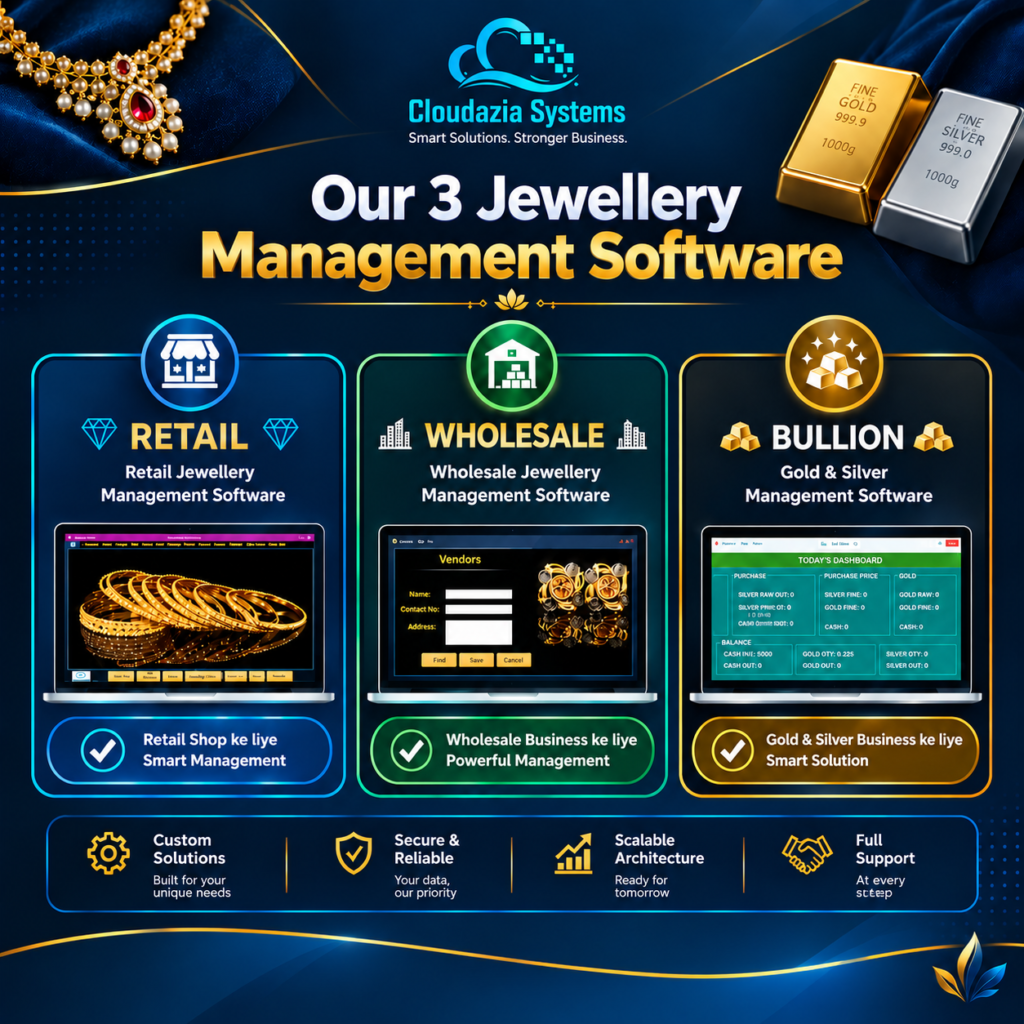
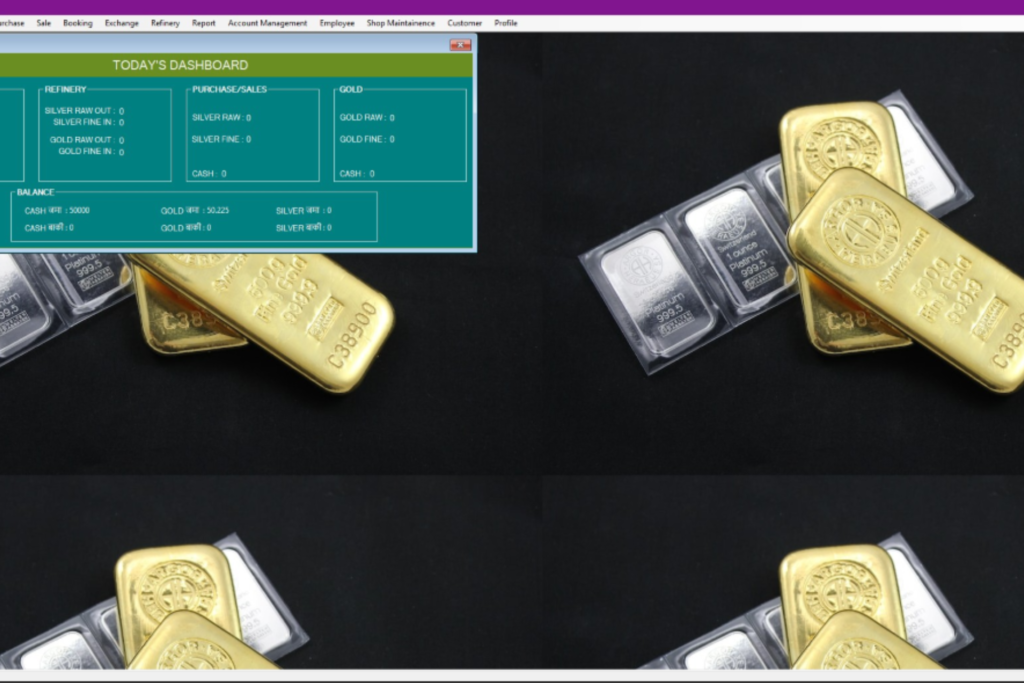
our 3 jewellery software – retail, wholesale and bullion
Top 10 Things That Separate Strong Jewellery Software From Average Software
Whichever category you’re buying for, these ten hold true across the board. This is what to actually check, not the logo on the homepage.
- Karat-wise rate automation, updated mid-day. Gold and silver rates move more than once daily — the software should apply the current rate the moment it changes, not just once at opening.
- Barcode billing with automatic making-charge and GST calculation. If a staff member is still doing this math by hand, the software isn’t earning its cost yet.
- Real-time, category-wise inventory. “How much 22K stock do we have” should be a screen, not a physical count.
- Built-in mortgage (Girvi/Gahan) and RD scheme management for any retail-facing system — this is India-specific and most generic platforms skip it entirely.
- Karigar and work-order tracking for anything touching manufacturing or wholesale supply.
- Bullion-specific stock logic — by weight and purity, not by finished SKU — for anyone trading metal directly.
- GST-ready reports with a direct Tally export, not a CSV that still needs manual cleanup.
- Multi-branch support from day one, even for a single-counter buyer, so a second location doesn’t force a system change later.
- Local support and training, ideally with someone who can visit the shop, not just a ticket queue in another time zone.
- A provider that’s still around in five years. Jewellery software holds years of customer, mortgage, and stock history — check how long the company has actually been building this, not just how new the interface looks.
Between these ten, points 4, 5, and 6 are the fastest way to tell jewellery management software apart from a repackaged general retail POS — they’re the features a jewellery business specifically needs and a generic platform specifically won’t have.
Retail vs. Wholesale vs. Bullion — Matching the Edition to the Business
A quick way to self-check which edition actually fits:
- You mostly sell finished pieces to walk-in customers, and old-gold exchange or mortgage lending is part of the business → you need jewellery software for retail operations, built around billing, customer accounts, and Girvi/Gahan.
- You manufacture or supply pieces to other retailers, and karigars are on your payroll → you need a wholesale edition with purchase orders and work-order tracking.
- You trade gold or silver by weight — buying, refining, or supplying bullion rather than finished jewellery → you need a bullion-specific system, not a retail one with a “bulk” toggle.
A fair number of jewellers eventually need more than one — a retailer that starts manufacturing for other shops, or a wholesaler that opens a retail counter. That’s worth asking about upfront: can the same provider’s editions share customer and stock data, or does moving into a second category mean starting over with a new vendor.
What “Best” Actually Means Here
“Best jewellery software” isn’t a single answer — it depends entirely on which of the three categories above the business sits in, and how much of the checklist a given system actually covers versus promises on a sales call. A single-counter retailer and a bullion refinery asking “what’s the best jewellery software” are really asking two different questions wearing the same words.
The more useful version of the question is narrower: best jewellery billing software for a single retail counter, or best jewellery business software for a wholesale manufacturer with three karigars on staff. Answered that specifically, most shortlists get short fast.
How Cloudazia Systems Fits This Comparison
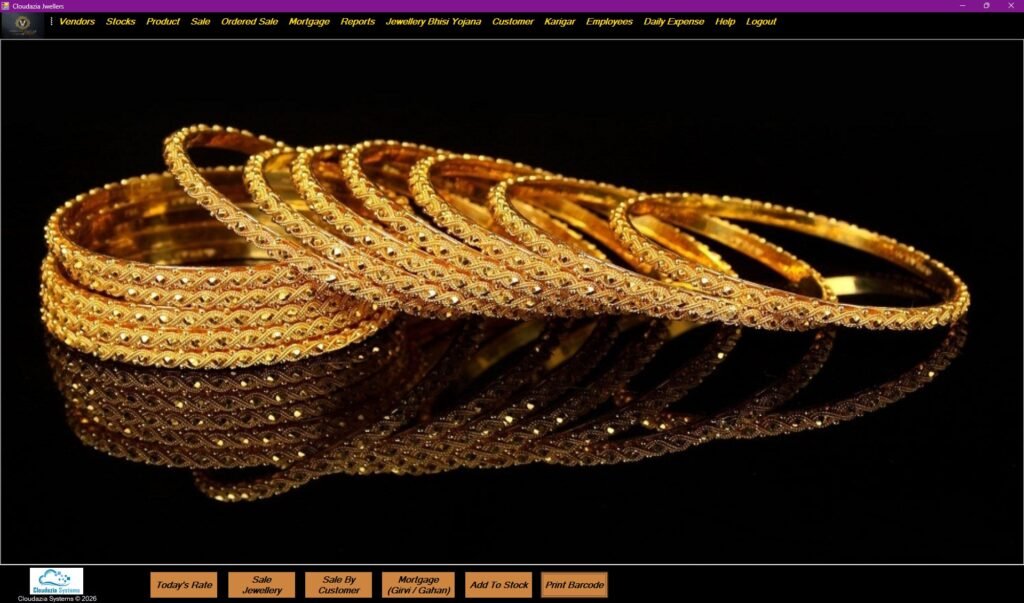
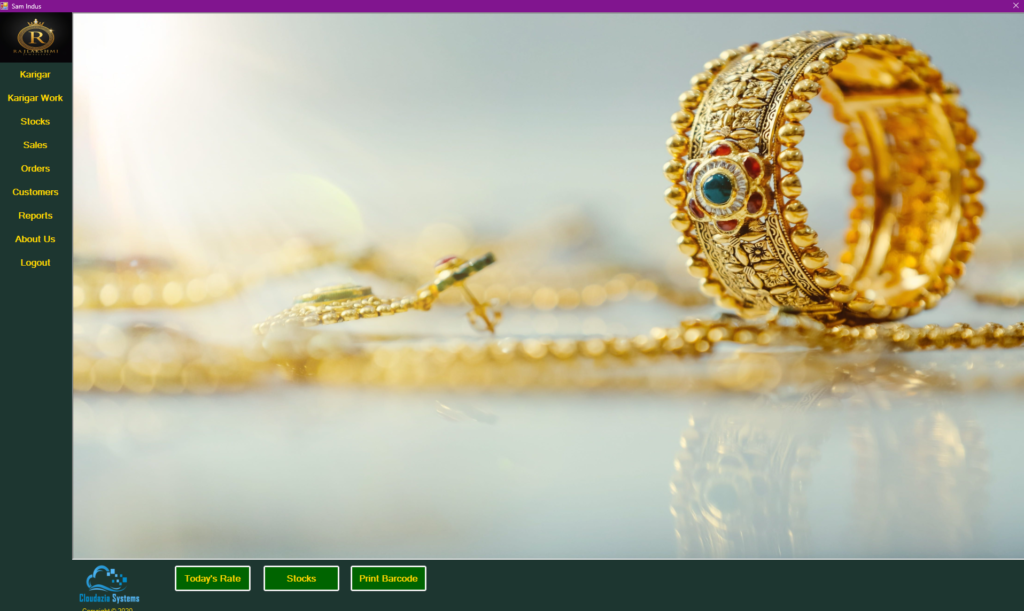
Cloudazia Systems has been building jewellery-specific systems since 2016, and covers all three categories from the checklist above on one connected platform — retail, wholesale, and bullion — rather than specialising in one and bolting the others on later. On the retail edition specifically, billing that takes five to ten minutes manually comes down to under a minute with barcode scanning, and most shops go live within one to two weeks, training included.
The full breakdown of what’s covered in each edition is on the jewellery management software page. For retailers specifically comparing what a purpose-built system should include, our earlier guide on jewellery software for retail stores goes deeper into that one category.
Common Mistakes When Comparing Jewellery Software in India
| Mistake | What actually happens |
| Choosing on price alone | The cheapest system is usually missing mortgage, RD, or karigar tracking — features get added as costly customisation later |
| Comparing a retail system to a wholesale ERP | Different categories solve different problems; the comparison itself is the error |
| Skipping the live demo | A brochure never shows how the system handles a real, messy bill with an exchange and a partial mortgage payment in one transaction |
| Assuming all “jewellery software” includes Girvi/Gahan | Many generic platforms don’t — confirm this specific module before signing anything |
| Not asking how long the provider has been in business | Jewellery software holds years of customer and stock history; a provider that folds in two years is a real risk |
How to Actually Test a Shortlist Before You Choose
- Confirm your category first — retail, wholesale, or bullion — before comparing any features.
- Ask for a demo using your own numbers, not the vendor’s sample data.
- Check for Girvi/Gahan, RD, and karigar tracking by name, not just “customer management.”
- Get a straight answer on GST/Tally export — watch it actually export, don’t take it on faith.
- Ask what happens if the business grows into a second category later — is that the same provider or a new vendor.
- Confirm local support — who shows up if the system goes down on a Saturday during wedding season.
Frequently Asked Questions About Jewellery Software in India
Is there really a single “best” jewellery software for every jeweller in India?
No — the right answer depends on whether the business is retail, wholesale, or bullion-focused. A system that’s excellent for retail billing usually isn’t built for karigar work orders or metal-weight bullion stock, and vice versa.
What’s the difference between jewellery management software and basic billing software?
Billing software calculates a bill. Jewelry management software connects billing to inventory, mortgage, RD accounts, vendor records, and GST reporting — the whole business runs from one system instead of several disconnected tools.
Does jewellery software in India usually include Girvi/Gahan mortgage management?
Not always — this is one of the most commonly missing features in generic or imported retail platforms. It’s worth confirming by name in any demo, since it’s specific to Indian jewellery retail.
Can one jewellery software system cover retail, wholesale, and bullion together?
Some can, if the provider built all three editions on the same platform rather than acquiring or bolting on separate tools. That’s worth asking directly, since it determines whether the business can grow across categories without switching vendors.
How long does it take to switch to a new jewellery software system?
Most retail shops are billing on a new system within days of training. Wholesale and bullion setups, which involve more historical stock and vendor data, typically take a bit longer to fully migrate — usually a few weeks.
Compare Jewellery Software the Right Way — Talk to Cloudazia Systems
If you’re working through a shortlist, the fastest way to cut through the marketing is a live demo on your own billing and rate scenario, across whichever category — retail, wholesale, or bullion — actually matches the business.
Book your free demo with Cloudazia Systems and see the system running before you decide anything.